As the East Bay’s ember resistance defensible space rules become top of mind to residents, I find myself thinking about discarded bike frames and functional art. When an entire population of homeowners with differing means is given new rules to protect their homes, I wonder about accessibility. As a local landscape design-build firm, I have started thinking critically about the impact this widespread movement will have. If we all need to source metal components for things like fencing and trash enclosures, how will this impact the global supply chain?
So what is “Ember” anyways? Zone 0 / AB 3074 (being called “Ember" here), and other defensible space ordinances, seek to establish zones around a home where homeowners must take direct action to ensure their home does not become a victim or vector for the spread of wildfires. Specifically this means that in “Zone 0,” the first five feet of space around the home, there can be no combustible materials like certain plantings, mulch, or wooden fencing and other structures. Though the ban of wood is only in the first 5 feet around the home, aesthetics will push many homeowners to choose an entirely wildfire-resistant fence, which sounds like a big supply chain shift for us landscapers.
Sustainability is woven into this topic inextricably, with the protection of homes from fire at the forefront, to the impact this has on homeowners ability to have beautiful green spaces at their homes, and my focus today, the materials landscapers will begin to source from wherever they can to meet demand. I’d like to think critically for a minute about what this ordinance in the East Bay may mean for other areas in the world, as well as illuminate some of the existing pathways for metal that we are all going to have to become acquainted with in the coming years. Steel and Aluminum will be the most commonly sought after types, I’d wager. Steel is known for its durability, while aluminum for being lightweight, and therefore less cumbersome for metalworkers to tame. But where do these materials come from?
Steel has long had wide-ranging industrial applications and is magnetic, giving it a remarkable recycle rate of 98% for structural steel, specifically. This means that the metal can be detected with magnets and extracted through crushing or melting, using machinery that has been around for some time. This is called the Electric Arc Furnace (EAF) method. If it is virgin ore, however, produced using the Blast Furnace / Basic Oxygen Furnace (BF-BOF) method, it is a high emissions and destructive endeavor.
Similarly with aluminum, mining for the raw material, bauxite ore, is a resource intensive and environmentally impactful process with documented impacts. The 2024 Mighty Earth report delves into the water pollution and therefore water scarcity and other impacts on forests this process involves. Driven largely by the electric vehicle supply chain, countries like Australia, Brazil, Guinea, and Indonesia are greatly impacted by the drive for building these vehicles. Broadly speaking, I think any company who seeks to make sourcing decisions from a profit-first perspective is a uniquely environmentally damaging entity.
With all of this said, I have a creative solution. Like any design firm, much of the what we end up installing is based on the unique needs of the customer, but there are some universal truths to my ethics in how to approach this. Firstly, there are only two clear and ethical sources for metal in this instance: reclaimed parts like abandoned bike rims, or fully/partially recycled metal. The latter is not necessarily cheaper, as you may think hearing the word “recycled.” Metal can be remolded so it keeps much of its value when recycled, and has the added cost of processing to be reshaped. Reclaimed parts, on the other hand, have not been put through this processing and are therefore much more accessible to the general public to collect or reclaim from their own waste. Working with my crew and our ability to weld parts together at will, Zone 0, fire vulnerable homeowners would have access to both.
Interesting visits to local metal scrap yards will begin to be commonplace for sourcing interesting and more standard pieces for this work. Alco Iron and Metal, CASS, and Aaron Metals are some local connections we will seek to make. Furthermore, we will continue to use our local love, Urban Ore, as a spot to source reclaimed materials. One of the less emphasized and exciting benefits to thinking about sustainability, is the community connections it forces us to forge. Engaging with and building partnerships with local industry is a cornerstone to making more sustainable choices. This is something I will gladly work hard to bring into fruition for my customers.
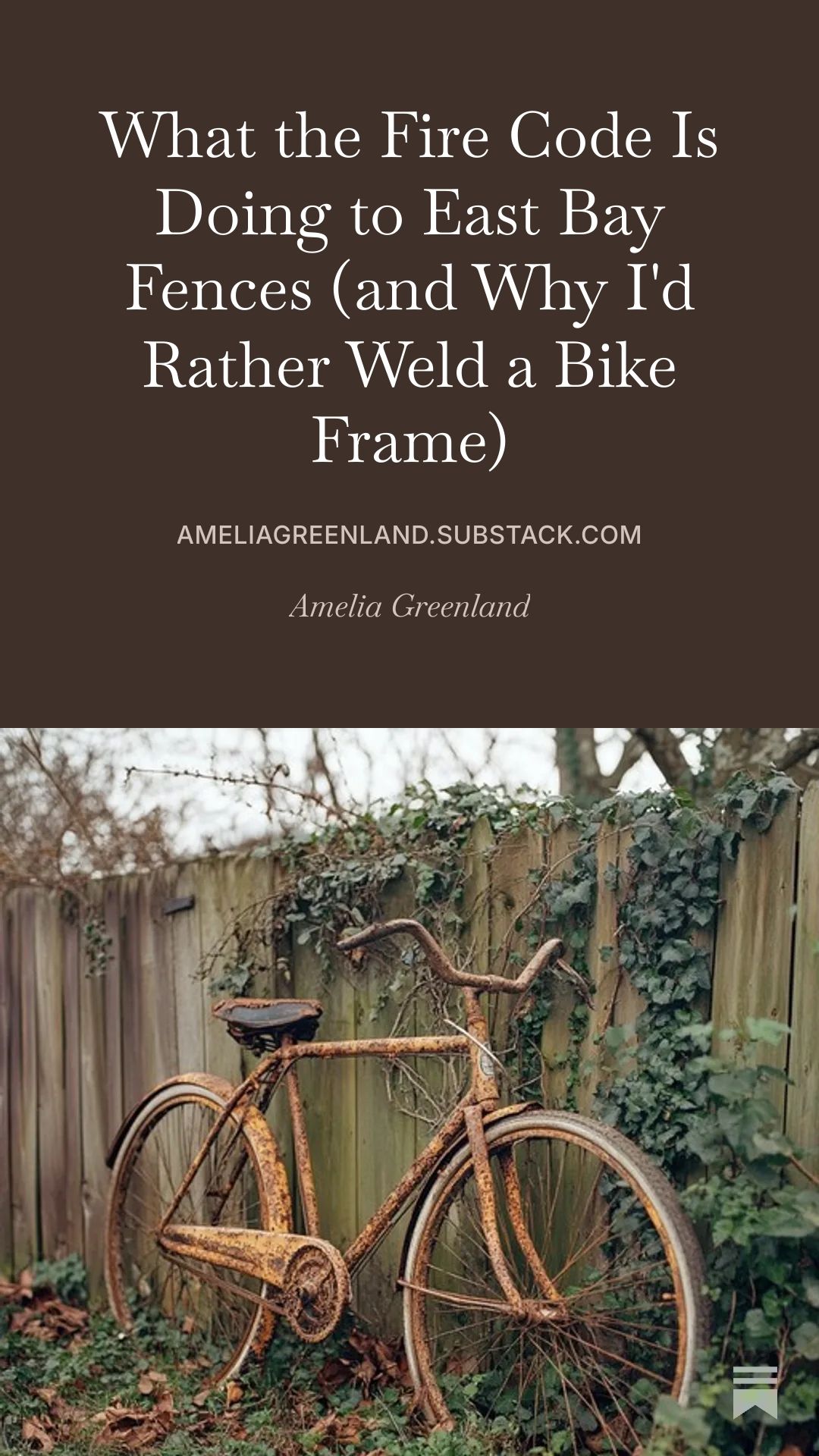
Finally I want to end by painting a picture I have held in my mind since brainstorming approaches to Zone 0 ordinances began. Whimsically patterned reclaimed bike rims, climbing high enough to block even the most rambunctious of deer. Each rim holds the memory of a rapid ride downhill with giggles on the air or the crossing of a finish line with hands held high. Reclaimed materials have their own charm and grace when assembled with an artistic eye. Let your garden be a place you can tell a story. One of conscious choices and forethought—one rooted in sustainability.